Stimming in Autism: Why It Happens, Types, and What Parents Can Do
Stimming in autism is one of the most common and noticeable signs of ASD. This is why many parents ask:
“Why does my child flap their hands like wings? Is this stimming? Should I stop it?”
In this article, we will take a detailed look at what stimming in autism is, why it occurs, when it may interfere with development, and how parents can gently help their child.
Stimming in Children With Autism: What It Is, Why It Happens, and What Parents Can Do
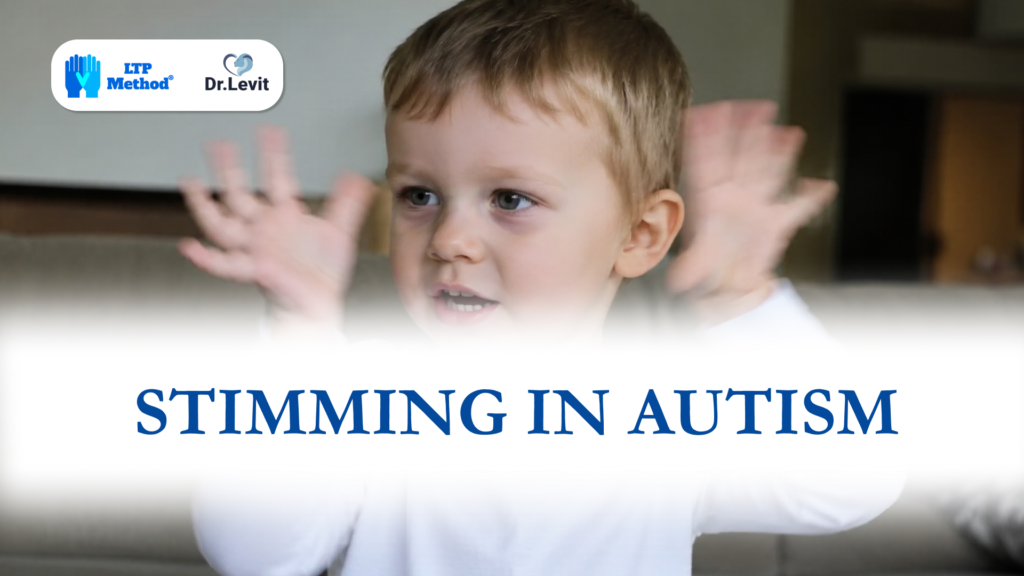
Does your child flap their hands like wings, rock back and forth, jump, or repeat the same sounds or movements? Parents often notice this behavior and wonder: What is stimming, why does it happen in children, and is it related to autism?
These repetitive actions are often called stims, while the behavior itself is known as stimming.
Stims may become especially noticeable during excitement, anxiety, fatigue, anticipation, or sensory overload. It is important not to simply try to stop the child’s movement, but to understand what is happening to the child at that moment and what function the behavior serves.
Let’s explain in simple terms what stimming in children is, what types of stims there are, why a child may flap their hands, and when parents should pay special attention to it.
What Are Stims in Simple Terms? 🧩
Stims are repetitive movements, sounds, or actions that may help a child cope with emotions, excitement, or sensory input.
For example, a child may:
- flap their hands;
- rock back and forth;
- jump;
- spin;
- move their fingers repetitively;
- repeat sounds;
- shake their hands;
- spin or closely examine objects for long periods.
Some children begin doing this when they are very happy. Others do it when they are anxious, tired, or in an unfamiliar environment.
The movement itself is only what the parent can see. To understand what it means, it is important to pay attention to the situation in which it occurs.
What Is Stimming?
Stimming is a term used to describe repetitive self-stimulatory behavior.
Individual manifestations of this behavior are often called stims.
Certain repetitive actions are not limited to children with Autism Spectrum Disorder. For example, a person may tap their foot, twirl a pen in their hands, or pace around a room when nervous.
However, in ASD, repetitive movements and actions may be significantly more pronounced, frequent, and noticeable.
That is why it is important to evaluate not only whether stims are present, but also how often they occur, in what situations they appear, and whether they interfere with the child’s everyday life.
What Types of Stims Can Children Have?
Stimming can look very different from one child to another. For one child, it may primarily involve hand movements; for another, it may involve sounds, rocking, or repetitive actions with objects.
Motor Stims
These may include:
- hand flapping;
- shaking the hands;
- rocking the body;
- jumping;
- spinning;
- repetitive finger movements;
- walking along a specific path repeatedly.
Vocal Stims 🗣️
A child may:
- repeat the same sound;
- hum;
- make repetitive vocal sounds;
- produce the same sounds repeatedly;
- repeatedly say individual words or phrases.
It is important to distinguish this behavior from speech that the child uses to address another person and communicate.
Visual Stims 👀
For example:
- staring at spinning objects for long periods;
- watching moving light;
- looking at objects from a particular angle;
- repeatedly watching the same movement.
Tactile Stims
These may include repeatedly touching certain surfaces, objects, hair, clothing, or the child’s own body.
Not all stims look the same, so what matters most is not the name of a particular movement, but why it occurs and what function it serves for the child.
Stimming in Autism
In autism, repetitive movements, actions, or interests may be one of the characteristics of a child’s behavior.
However, it is important to understand: stimming alone cannot determine whether or not a child has autism.
When evaluating ASD, specialists look at a combination of developmental and behavioral characteristics, including social interaction, communication, interests, repetitive behavior, and other signs.
So, if a child simply flaps their hands when they are very excited, this alone does not mean they have autism.
It is a different situation when parents also notice difficulties with communication, understanding spoken language, interaction, adapting to change, and other developmental differences.
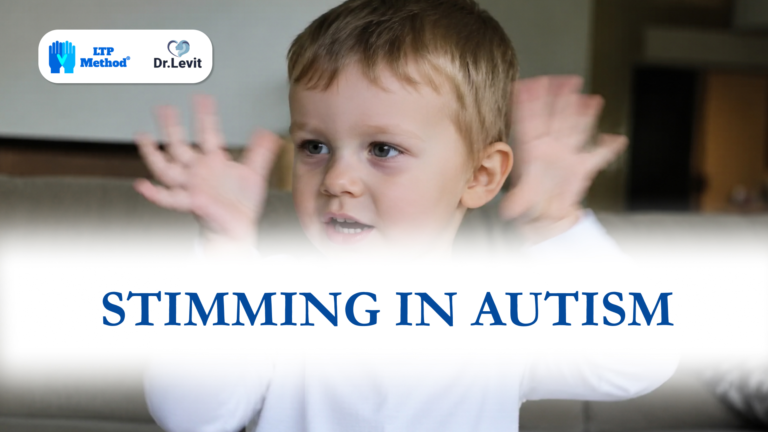
Why Does a Child Flap Their Hands Like Wings?
One of the most common questions parents ask is:
“Why does my child flap their hands like wings?”
This movement can indeed be one form of stimming.
Parents often notice it when a child:
- is happy;
- is highly excited;
- is waiting for something enjoyable;
- is nervous;
- feels anxious;
- is in an unfamiliar environment;
- is experiencing a large amount of sensory input;
- cannot express how they feel in words.
For example, a child sees a favorite toy and begins rapidly flapping their hands. Or the child enters a noisy, unfamiliar environment and a similar movement appears.
The action may look the same from the outside, but the reasons in these two situations may be completely different.
That is why it is important to look not only at the child’s hands, but at what happened immediately before the movement began.
Why Does a Child Flap Their Hands When Emotional? 😊
Sometimes parents notice that their child primarily flaps their hands when happy or highly excited.
The emotion may be so intense that the child expresses it not only through facial expressions or words, but with their entire body.
Hand flapping may therefore occur:
during happiness → anticipation → excitement → anxiety → overload.
If a child finds it difficult to communicate “I’m happy,” “I’m scared,” “It’s too loud,” or “I’m tired” with words, their internal state may be more visible through their behavior.
For parents, this is an important clue. Instead of asking only “How can I stop this movement?”, it may be more useful to first ask:
“Why is it happening right now?”
Why Does Stimming Occur in Children?
There is not always one universal reason for stimming. Different factors may influence how strongly it is expressed.
1. Strong Emotions
Happiness, excitement, fear, anticipation, and anxiety may be accompanied by repetitive movements.
2. Sensory Overload
A large amount of noise, people, light, touch, or other sensory input may be difficult for a child.
A repetitive action in this situation may help the child regulate their state.
3. Seeking Certain Sensations
Some children, on the other hand, seek additional movement, visual, or tactile stimulation.
4. Communication Difficulties
If a child finds it difficult to communicate how they feel through words or another understandable method, changes in behavior may be the first thing people around them notice.
5. Fatigue and Stress
Pay attention to whether stimming increases after a busy day, lack of sleep, many activities, or changes in the child’s usual routine.
This type of observation can sometimes help reveal a pattern.
Should Parents Try to Stop Stimming?
Parents should not make it their goal to stop every repetitive movement at any cost.
First, it is necessary to understand its function.
Simply holding the child’s hands, constantly correcting them, or demanding that they “stop” does not necessarily eliminate the reason the behavior appeared.
Particular attention should be paid if stimming:
- causes injury;
- interferes with eating or sleeping;
- almost constantly interferes with interaction with others;
- interferes with learning or everyday activities;
- suddenly becomes significantly more intense;
- is accompanied by a noticeable deterioration in the child’s condition or behavior.
In these situations, it is important to understand what exactly has changed and why the behavior has intensified.
What Should Parents Do if Their Child Starts Stimming? 🔎
The first thing you can do is start observing.
For several days, try noting:
What happened before the stim? → What did the stim look like? → How long did it last? → What happened afterward?
For example:
Guests arrived → it became noisy → the child started rocking → went to a quiet room → calmed down.
Or:
Saw Dad → became excited → started flapping their hands → the movement stopped after a minute.
From the perspective of the underlying cause, these two situations are very different, even though the repetitive movement itself may look similar.
Keeping this type of journal can help identify patterns and better understand the child’s state.
When Does Stimming Require Additional Attention?
Seeking a professional evaluation is especially important when repetitive behavior occurs alongside other developmental difficulties.
For example, if a child:
- does not respond to their name;
- rarely uses gestures to communicate;
- does not ask parents for help;
- does not understand simple requests;
- rarely initiates interaction;
- loses previously acquired skills;
- experiences significant difficulties in everyday life.
In this situation, what matters is no longer one individual stim, but the child’s overall developmental picture.
How Is Stimming Addressed in the LTP® Method? 💙
In the LTP® Method, attention is focused not only on the outward manifestation of the child’s behavior.
The goal is to understand in which situations stimming intensifies, what is happening with the child, and what factors may be affecting their condition and interaction with others.
The LTP® Method includes several areas of work.
Nutrition Stabilization 🍽️
Parents receive recommendations on organizing their child’s diet and gradually working with selective eating.
Vitamin Therapy
The next stage of the program is carried out according to individualized recommendations from specialists.
Psychotherapeutic Consulting
Parents learn to observe their child’s behavior, better understand their reactions, and build interaction in everyday situations.
The goal is not to mechanically prevent a child from flapping their hands or rocking, but to understand the reasons behind the behavior and work with the child’s development comprehensively.
How Is Stimming Addressed in the LTP® Method?
In the LTP® Method, attention is focused not only on the outward manifestation of the child’s behavior.
The goal is to understand in which situations stimming intensifies, what is happening with the child, and what factors may be affecting their condition and interaction with others.
The LTP® Method includes several areas of work.
Nutrition Stabilization
Parents receive recommendations on organizing their child’s diet and gradually working with selective eating.
Vitamin Therapy
The next stage of the program is carried out according to individualized recommendations from specialists.
Psychotherapeutic Consulting
Parents learn to observe their child’s behavior, better understand their reactions, and build interaction in everyday situations.
The goal is not to mechanically prevent a child from flapping their hands or rocking, but to understand the reasons behind the behavior and work with the child’s development comprehensively.
What Parents Need to Know
Stims are repetitive movements, sounds, or actions. Stimming can occur in different children, and in autism, it may be one of the more noticeable behavioral characteristics.
If a child flaps their hands like wings, rocks back and forth, or repeats the same actions, parents should not focus only on the movement itself.
It is much more important to understand:
when it occurs → what happens before it → what function it serves → whether it interferes with the child’s everyday life.
And if parents notice difficulties with speech, comprehension, communication, behavior, or other developmental differences alongside stimming, the situation should be considered comprehensively.
Want to Take a Closer Look at Your Child’s Situation?
If you notice stimming, difficulties with speech, comprehension, interaction, or behavior and are unsure where to start, you can schedule a free online consultation with an LTP® specialist.
During the consultation, the specialist will take a closer look at your child’s situation and existing difficulties and explain possible next steps.
Schedule a Free Consultation
Frequently Asked Questions About Stimming ❓
If My Child Flaps Their Hands, Does That Mean Autism?
No. This sign alone is not enough to conclude that a child has autism. The overall combination of the child’s developmental and behavioral characteristics is what matters.
Does Stimming Only Occur in Autistic People?
No. Repetitive actions can also occur in people without ASD. In autism, they may be more pronounced or may affect everyday activities more frequently.
Why Does Stimming Increase When a Child Is Happy?
Strong emotional excitement may be accompanied by physical reactions. That is why some children begin jumping, flapping their hands, or making other repetitive movements specifically when they are happy.
Can Parents Stop a Child From Stimming?
Simply prohibiting the behavior does not explain its cause. First, it is important to understand why the child needs this action and whether it may be a response to stress, overload, or a strong emotion.
Can Stimming Change Over Time?
Yes. As a child develops, the type, frequency, and intensity of repetitive behavior may change.