Should You Vaccinate Your Child or Not?
When asked whether or not a child should be vaccinated, Dr. Lev Levit has a clear answer.
“Vaccination triggers serious autoimmune processes in many children that are difficult to treat,” says Lev Isaakovich, a physician with 30 years of experience who heads the Center for Child Development and Rehabilitation in Israel. “These are not only my personal observations. They are also confirmed by scientific studies and the experience of world-renowned scientists. I will name some of them: Dr. Harris L. Coulter (USA), Dr. Andrew Wakefield (USA), Dr. Edward Yazbak, MD, a member of the Academy of Pediatrics (USA), Marc Girard, a European expert in pharmacovigilance and pharmacoepidemiology, and many others.”
Post-vaccination complications can become a true family tragedy.
Recently, a mother came to us with a child suffering from hydrocephalus, muscle atrophy, and a heart defect. Initially, however, the child had been completely healthy.
The day after receiving the hepatitis B vaccine, the boy developed jaundice. This progressed into a severe form of jaundice and meningoencephalitis, which resulted in damage to the entire central nervous system.
Can Such Severe Damage Really Be Directly Related to Vaccination?
— Can such severe damage really be directly related to vaccination? We are constantly told that vaccines are safe and that there is no connection between autism and vaccination…
“My experience says otherwise. I encounter victims of vaccination far too often.
Believe me, the connection between autism and vaccines will not be found until there is a truly independent study. If research is conducted by institutions that develop vaccines themselves, what can we really say?
I would like to see the results of a genuine study. A very simple but objective one.
To do this, researchers would need to examine a group of vaccinated and unvaccinated children living under the same social and living conditions and evaluate their health.
I am convinced that vaccinated children would have a significantly higher incidence of cancer, neurological diseases, and metabolic disorders.
Unfortunately, there is a deliberate tendency to ignore and downplay the side effects of vaccination.”
Should You Vaccinate Your Child?
“I have been working with children with developmental delays and autism since 1995.
At first, my primary patients were children with motor impairments and developmental delays. Many families came to me with newborn injuries, cerebral hypoxia, and prenatal damage.
But over time, more and more children began coming to the clinic with unusual behavior and symptoms of the autism spectrum.
These children lacked contact with the world around them, often had selective eating, an inability to think, and obsessive movements.
The symptoms did not appear immediately after birth, as they often do in children with ordinary developmental delays, but between the ages of 12 and 17 months.
Parents reported that until approximately 12–13 months of age, their children had been developing normally.
But suddenly, tantrums began. The children stopped recognizing their loved ones and stopped making sounds and saying words as they had before.
After the age of two, the regression intensified.
However, parents did not pay attention to the fact that, alongside the regression, an intensive vaccination process was also taking place.”
Are Parents Not Sufficiently Informed About Vaccine Side Effects?
— So, are parents not sufficiently informed about the side effects of vaccines?
“In the standard schedule, a child receives 23 vaccines or even more before the age of one.
Vaccine instructions list possible complications and side effects. These include not only redness of the skin and elevated body temperature.
Severe damage to the central nervous system and internal organs may occur, including meningoencephalitis and panencephalitis.
Since the mid-1990s, the number of vaccines a child receives has increased sharply.
They all contain a number of toxic substances. Among them are formalin, aluminum, mercury, preservatives, and antibiotics.
Vaccines contain biological residues from the nutrient media on which viruses are grown, chromosomes, animal DNA, not to mention the viruses themselves.
All of this is injected directly into the bloodstream.
Toxic substances are present in vaccines in small amounts, but when intensive vaccination takes place throughout the year, both the toxic substances contained in vaccines and the body’s reactions to the vaccinations accumulate.
As a result of intensive vaccination without proper adherence to vaccination rules and schedules, autoimmune damage to the body may even develop.
This means that the body’s protective cells, which are designed to fight external factors such as microbes and viruses, begin attacking the body’s own cells.
There are a number of scientific publications on this subject.
Autoimmune diseases may manifest as diabetes, cancerous processes, diseases of the joints and intestines, and cerebral palsy.
The negative effects of vaccination, involving damage to the central nervous system, may occur both while vaccination continues and even after it has been discontinued.
In many cases, children who developed autism initially showed no side effects.
But in some cases, children react strongly to vaccination: they cry, develop a fever, and may experience seizures, tremors, vomiting, and nausea.
In such cases, vaccination must be stopped and the child should be given a homeopathic antidote (Thuja or Silicea) or taken to a homeopath.”
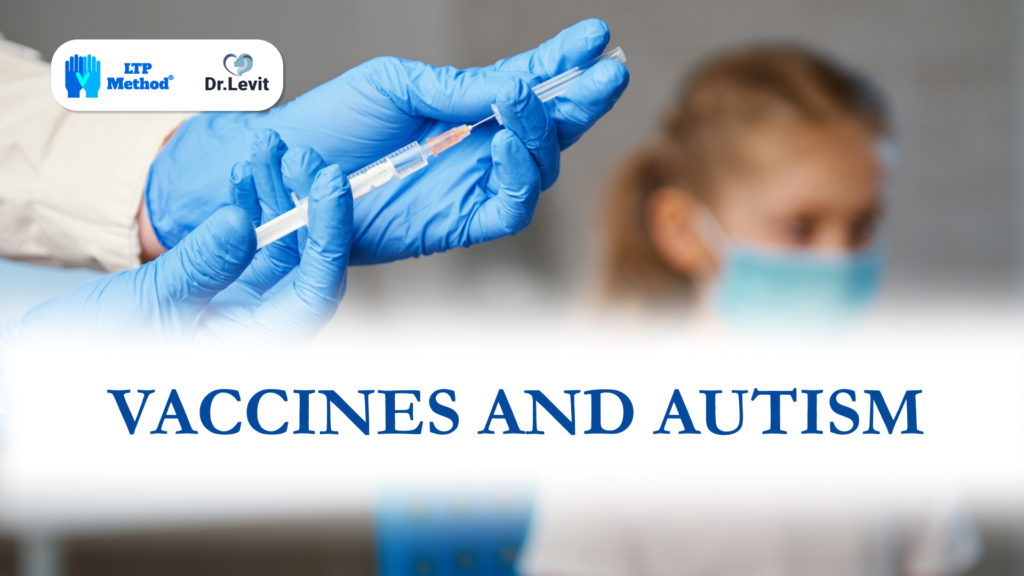
Should Parents Vaccinate Their Children? 💉
— What would you say to parents who are unsure whether they should vaccinate their children?
“Think carefully before making a decision.
We know that at birth, a child receives immunity from the mother against childhood infectious diseases for the first year of life.
No one has conducted research on how the body responds to vaccination when it already has antibodies against a particular disease.
It is assumed by default that the child has no antibodies.
A child should go through all childhood infectious diseases within the first two or three years of life, and this will allow the child to develop a healthy immune system.
Of course, all of these diseases are dangerous, but with antibiotics, fever-reducing medications, and good social and living conditions, these illnesses tend to be mild.
It is not worth exchanging mumps for diabetes or measles for autism.
I am not advocating for the complete elimination of vaccination.
But it is important to understand the necessity of each vaccine and its purpose.
The hepatitis B vaccine is administered within the first few hours after a child is born. But is there an urgent need for this?
Hepatitis B is transmitted through abnormal sexual contact involving damage to the integrity of the skin and mucous membranes.
It can also be transmitted through direct infection via blood from non-sterile reusable syringes.
A person can become infected through a blood transfusion from an infected donor to a healthy person.
In modern clinics, this is practically impossible.
So the question is: why vaccinate newborns when the routes of transmission of the virus are absent?
One of the main contraindications for administering this vaccine is an intolerance to digesting flour-based products.
In other words, the hepatitis B vaccine itself can provoke this condition.
Perhaps this is one of the main factors explaining why intolerance to flour-based products has become so widespread among children.
It manifests in the form of a number of diseases both in children with autism and in children with developmental delays.
The problem is so serious that entire sections of stores are now dedicated to people following a gluten-free diet.
My advice to parents is: first and foremost, refrain from hepatitis B vaccination.”
Recommendations for Parents ⚠️
- You may choose not to vaccinate your children if you make that decision; you have the legal right to do so. However, if you decide to vaccinate your children, at the very least, follow a strict schedule.
- Try not to administer several vaccines at the same time. It is enough to give one vaccine and then, two or three months later, if the child is completely healthy, administer the next one.
- Vaccination is strictly prohibited in the presence of inflammation or allergic conditions, or if the child experiences reactions such as fever, seizures, or other adverse effects.
“The vaccine should be administered subcutaneously to allow for slow absorption.
Not all nurses follow this rule. Some administer it intramuscularly, meaning directly into the bloodstream.
Moreover, even the basic vaccination schedule is sometimes ignored.
If a parent has missed a vaccination, a child may be given two or three vaccines at once!
Children often develop ear infections and sinusitis.
No one considers that this may possibly be the body’s reaction to the previous vaccine.
Against the background of these conditions, children are given the next vaccine, which is strictly prohibited.
Parents should remain vigilant and remember that there is a serious risk of developing post-vaccination complications.”
Prepared by Anna Reznikova
Frequently Asked Questions
1. Is It True That Vaccination Can Lead to Autism?
Answer: Dr. Lev Levit, a physician with 30 years of experience, states that there is a connection between vaccination and autism that cannot be ignored.
He notes that symptoms of autism in children often appear after 12 months of age—precisely during the period of intensive vaccination.
Although conventional medicine does not recognize this connection, Dr. Levit insists on the need for independent studies that compare the health of vaccinated and unvaccinated children living under the same conditions.
2. What Complications After Vaccination Are Most Common?
Answer: In addition to standard reactions such as redness or fever, Dr. Levit points to more serious consequences: meningoencephalitis, panencephalitis, autoimmune diseases, damage to the central nervous system, as well as metabolic and digestive disorders.
He provides examples of real cases in which previously healthy children developed severe, irreversible complications after vaccination.
3. What Substances in Vaccines May Be Dangerous?
Answer: According to Dr. Levit, many vaccines contain toxic components: formalin, mercury, aluminum, preservatives, antibiotics, as well as biological residues such as animal DNA and nutrient media.
With frequent vaccine administration, these substances accumulate in the body, which may cause disruptions in the immune system and the development of autoimmune diseases.
4. How Can Parents Tell Whether a Complication Is Related to Vaccination?
Answer: Sometimes the reaction is immediately visible: high fever, seizures, vomiting, or crying.
But symptoms often appear later and may include behavioral changes, loss of previously acquired skills, and developmental regression.
It is important for parents to monitor their child’s condition before and after vaccination.
If unusual reactions occur, further vaccination should be stopped immediately, and parents should consult a doctor or homeopath.
5. Is It Necessary to Completely Refuse Vaccination?
Answer: Dr. Levit does not call for the complete elimination of vaccination.
He emphasizes the importance of an informed approach: the necessity of each specific vaccine should be evaluated.
For example, the hepatitis B vaccine is administered within the first few hours of life, even though the routes of transmission of the disease are extremely rare among newborns.
The doctor recommends avoiding vaccinations when there is no urgent need and strictly following a vaccination schedule, administering no more than one vaccine at a time.
6. What Should Every Parent Know Before Vaccinating Their Child?
Answer: First and foremost, you have the legal right to refuse vaccinations.
If you decide to vaccinate, make sure that your child is completely healthy and has no signs of inflammation, allergies, or reactions to previous vaccines.
The vaccine should be administered subcutaneously rather than intramuscularly to avoid a sudden reaction.
It is important not to combine vaccines and not to administer them during periods of illness or exacerbation.
This will help reduce the risk of developing serious complications.