📺 Cartoons and Autism: Can Cartoons Cause Autism, and Why Does a Child With ASD Constantly Watch Screens?
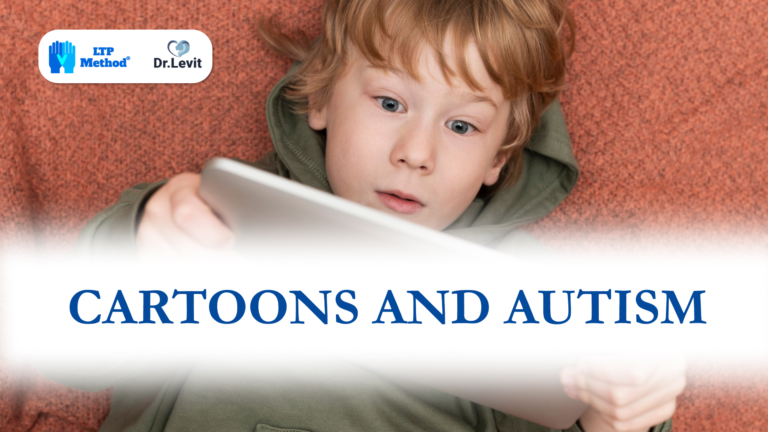
“He can watch cartoons for hours.”
“She doesn’t respond to her name, but as soon as I turn on her favorite cartoon, she comes running.”
“I tried taking the phone away — and it caused a meltdown.”
“He repeats phrases from cartoons but barely speaks on his own.”
These situations are familiar to many parents of children with ASD and speech delays.
And they lead to an alarming question:
Can cartoons cause autism or speech delay?
And if a child has already been diagnosed with ASD:
Why are they so strongly drawn to screens, and should cartoons be completely prohibited?
Let’s take a closer look.
❓ Can Cartoons Cause Autism?
Let’s start with the most important point.
There is no convincing evidence that watching cartoons causes Autism Spectrum Disorder.
You may sometimes come across the term “virtual autism” online. However, this is not an official medical diagnosis.
Autism is a developmental disorder, and it is incorrect to explain its development by saying that a child watched too many cartoons.
But there is an important nuance.
The fact that cartoons do not cause autism does not mean that the amount of screen time has no impact on a child’s everyday life.
Especially if screens gradually begin to replace interaction with people, play, and other activities.
🧩 Why Do Children With Autism Like Watching Cartoons?
Parents ask this question very often.
And the answer may be much more interesting than simply:
“They’re used to the phone.”
A real person is unpredictable.
Mom may ask a new question.
Another child may change the rules of the game.
The child has to follow another person’s facial expressions, understand their tone of voice, wait for a response, and take initiative.
But a cartoon?
It is predictable.
A favorite episode starts the same way every time.
The characters say the same phrases.
The music appears at the same moment.
A favorite part can be played again and again.
For a child who has difficulty interacting with other people and processing constantly changing information, this format may be significantly easier.
That is why some children with ASD may be much more drawn to cartoons than to regular play or communication.
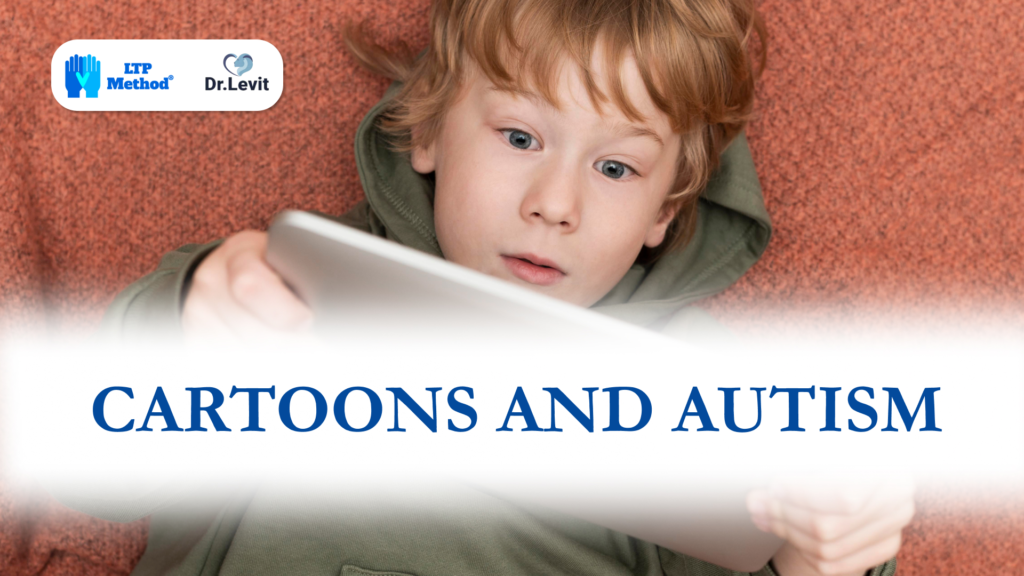
📺 Do Autistic Children Watch Cartoons More Than Other Children?
It would be incorrect to say that all children with autism constantly watch cartoons.
Children with ASD are very different.
But a strong interest in screens can occur.
For one child, it may be cartoons.
For another, short videos.
For a third, a specific commercial.
For a fourth, it may be the same video clip that they are ready to watch dozens of times.
That is why it is more important not simply to count the minutes spent in front of a screen, but to ask:
What role do cartoons play in this particular child’s life?
🚨 When Should a Strong Interest in Cartoons Really Be a Concern?
Watching cartoons itself is not the issue.
The overall picture matters.
It is worth paying attention if the child:
🔹 can spend a great deal of time in front of a screen and has extreme difficulty transitioning away from it;
🔹 has a severe meltdown when someone tries to turn off the phone or TV;
🔹 prefers screens to almost any shared activity;
🔹 rarely approaches their parents while watching;
🔹 shows little interest in shared play;
🔹 constantly demands the same videos or episodes;
🔹 repeats many phrases from cartoons but rarely uses their own speech to communicate;
🔹 knows how to navigate a phone extremely well but struggles with simple everyday requests.
Then the question is no longer only:
“How many cartoons can they watch?”
It is much more important to ask:
“Why is interacting with a screen so much easier and more appealing to this child than interacting with people?”
💬 “They Know Every Cartoon by Heart but Barely Speak”
This can be especially confusing for parents.
A child may:
🎵 sing entire songs;
🗣️ repeat long phrases spoken by characters;
🔢 count;
🔤 name letters;
🐶 know the names of dozens of animals.
It seems like:
“But they can talk!”
And then the child wants a drink — and instead of using words, they start screaming.
They cannot open a box — but do not ask for help.
Mom asks a question — there is no answer.
Another child comes over to meet them — but no interaction occurs.
Why?
Because the ability to reproduce a phrase that was heard and the ability to communicate independently are not the same thing.
Speech is not only needed to pronounce words.
A child needs to learn how to use it to interact with another person.
🔁 Why Does a Child Repeat Phrases From Cartoons?
Some parents notice:
“They don’t tell me anything on their own, but they repeat cartoons word for word.”
Repeating words or phrases that have been heard is called echolalia.
It can appear in different ways.
A child may repeat a phrase immediately after hearing it.
Or they may repeat a line from a cartoon hours later or even after a longer period of time.
Simply having a large number of memorized phrases does not show how well the child understands language or how independently they can communicate.
That is why it is much more important to look at:
Can they use words on their own initiative and in an appropriate situation?
🧠 “But They Understand Everything — They Just Don’t Talk”
This is another area where screens can sometimes create a misleading impression.
For example, someone says to the child:
“Let’s watch cartoons.”
They immediately come running.
It seems like:
“See? They understand everything perfectly.”
But try a different instruction:
“Bring the blue T-shirt from the room and put it on the chair.”
And the child may become confused.
Why?
Because understanding a familiar phrase in a familiar context and understanding varied spoken language are different levels of skill.
That is why, when evaluating development, it is important to look beyond whether the child responds to words like “cartoons,” “outside,” or “candy.”
📵 Should Cartoons Be Completely Banned for a Child With Autism?
There is no need to go to extremes here either.
A complete ban on cartoons by itself does not eliminate autism or automatically trigger speech development.
If a child has difficulties understanding speech, with joint attention, and with communication, simply turning off the TV will not develop these skills on its own.
But if screens take up a significant part of the day and almost completely replace other activities, parents should reconsider the role screens play.
The main question is not only:
“How many minutes should we allow?”
But:
“What does the child do when there is no screen?”
Do they play?
Do they approach you?
Do they make requests?
Do they show you interesting things?
Can they occupy themselves?
Do they involve you in what they are doing?
Or does the child immediately demand the phone back as soon as the screen is removed?
This is much more informative.
🎓 Can Cartoons Be Beneficial for a Child With ASD?
A cartoon itself is not necessarily something bad.
Videos can be used for entertainment, as part of a shared activity, or as additional material.
But there is a fundamental difference between these situations:
the child watches a cartoon and then returns to everyday life
and
the screen has become the child’s main or almost only source of interest and way to stay occupied.
In addition, watching an “educational cartoon” should not automatically be considered complete learning.
A child may learn letters, numbers, colors, and animal names from videos.
But then this knowledge needs to be used in real life and in interaction with other people.
❗ The Main Question Is Not “Should We Take Away Cartoons?”
Imagine a child.
They speak very little.
They rarely make requests.
They do not call Mom over to show her something interesting.
They do not always understand spoken language.
They have difficulty playing with other children.
But they can independently find YouTube, choose the video they want, and watch it repeatedly for hours.
You can simply take away the tablet.
But what will appear in its place?
Independent play?
Approaching Mom?
Joint attention?
Requests?
Conversation?
Not necessarily.
That is why the task is much deeper than simply reducing screen time.
The child needs help developing the ways of interacting with the real world that they currently lack.
💙 How Is Communication Addressed in LTP®?
The LTP® Method is not built around the idea:
“Just take the child’s phone away — and they will start communicating.”
The child is considered as a whole.
The program is structured step by step.
🥗 Stage 1 — Nutrition Stabilization
First, work focuses on the child’s diet and food selectivity.
💊 Stage 2 — Vitamin Therapy
After nutrition has been stabilized, the work continues with the second stage of the program.
🧠 Stage 3 — Psychotherapeutic Consulting
At this stage, the work focuses, among other things, on the child’s understanding, communication, interaction, and independence.
At the same time, LTP® specialists primarily teach the parent.
Why?
Because a child does not need communication skills for just one hour during a session.
They need them in the morning when they want something to eat.
On a walk.
At the store.
During play.
When they need help.
When they want to show something.
When they do not like something.
It is in these natural situations that parents learn to create conditions in which the child needs to interact with another person, not only with a screen.
📩 “Without the Phone, My Child Doesn’t Do Anything. What Should I Do?”
If a child watches cartoons for hours, has great difficulty when the screen is turned off, barely plays independently, or prefers the phone to interacting with people, simply taking away the device is indeed not enough.
It is important to understand why the child is so strongly drawn into the screen and what developmental difficulties are present at the same time.
During a free initial consultation with a Dr. Levit Clinic specialist, you can discuss your child’s situation.
Especially if you also notice:
🔹 speech delay;
🔹 difficulty understanding spoken language;
🔹 absence of a pointing gesture;
🔹 absence of independent requests;
🔹 echolalia;
🔹 difficulties with interaction;
🔹 stimming;
🔹 significant food selectivity;
🔹 sleep problems;
🔹 meltdowns or aggression.
The question is not only how many cartoons a child watches. It is important to understand what is happening with their development beyond the screen.
👉 Complete the questionnaire for a free consultation
❓ Frequently Asked Questions
📺 Can Cartoons Cause Autism?
There is no convincing evidence that watching cartoons directly causes Autism Spectrum Disorder. The term “virtual autism” is also not an official medical diagnosis.
🧩 Why Do Children With Autism Like Watching Cartoons?
For some children with ASD, a screen may be more predictable and easier to understand than interacting with people. A favorite cartoon can be watched repeatedly, events are repeated, and the child does not have to constantly respond to a changing social situation.
📱 Are Cartoons Harmful for Children With Autism?
Watching cartoons itself does not necessarily mean harm. It is important to consider the amount of screen time and whether screens are replacing communication, play, physical activity, and other activities in the child’s life.
💬 Can Cartoons Cause Speech Delay?
Speech delay should not automatically be attributed to watching cartoons. If a child speaks very little or does not use speech to communicate, it is important to evaluate speech development, understanding, communication, and other developmental characteristics.
🗣️ Why Does My Child Repeat Phrases From Cartoons but Not Speak Independently?
A child may be very good at memorizing and repeating phrases they have heard while still having difficulty using speech independently. Repetition of words and phrases is called echolalia, and by itself it does not mean that a child can use speech for meaningful communication.
📵 Should Cartoons Be Completely Removed for a Child With ASD?
A complete ban on cartoons by itself does not eliminate ASD or develop the necessary communication skills. It is important to evaluate the role screens play in the child’s life and develop play, understanding, independent requests, and interaction with people.