Signs and Symptoms of Autism in Children
Signs of Autism in Children: How to Recognize the Early Symptoms and What Parents Can Do
Signs of autism in children can appear in very different ways. One child may not speak and barely respond when spoken to, while another may know many words but rarely use them to communicate. Some children avoid eye contact, while others look people in the eyes but do not approach their parents, point to objects, or try to share their interests with them.
Parents often begin searching for information about autism when they notice unusual behavior: the child does not respond to their name, flaps their hands like wings, spins in circles, does not point, uses an adult’s hand instead of making a request, does not play with other children, or their speech is not developing as expected.
❗ Important: one isolated sign does not mean that a child has autism. It is important to look at the child’s overall development: interaction, understanding of speech, communication, play, behavior, sensory responses, and independence.
Let’s look at the main signs of autism in children and, most importantly, what parents can do if you recognize your child in this description. 👇
🧩 What Is Autism in a Child?
Autism Spectrum Disorder (ASD) is associated with developmental differences that may affect social interaction, communication, behavior, interests, and sensory processing.
The manifestations of ASD can vary greatly. That is exactly why the term “spectrum” is used.
One child may not speak and may have significant difficulty understanding spoken language.
Another may speak in sentences, know letters, numbers, and the names of objects, but have difficulty with conversation, making requests, communicating with peers, or understanding social situations.
That is why it is important to look not only at whether a child speaks or not, but at how they use their skills in real life.
🔎 Early Signs of Autism in Children
Parents most often notice not one symptom, but a combination of several developmental differences.
| What to Pay Attention To | What It May Look Like |
|---|---|
| 👀 Interaction | Rarely pays attention to an adult during communication, does not monitor the adult’s reaction |
| 👆 Gestures | Does not point, uses few other gestures |
| 💬 Speech | Does not speak or knows words but rarely uses them to communicate |
| 👂 Understanding | Does not always understand simple requests or spoken language |
| 🤝 Approaching an Adult | Leads an adult by the hand, uses the adult’s hand instead of making a request |
| 🧸 Play | Plays in a repetitive way, repeats the same actions for long periods |
| 👧 Other Children | Shows little interest in peers, rarely joins shared play |
| 🔄 Repetitive Actions | Flaps hands, rocks, spins, repeats movements |
| 🔊 Sensory Responses | Reacts unusually to sounds, light, clothing, touch, or food |
| 📅 Changes | Has difficulty coping with changes in the usual routine |
⚠️ Even the presence of several of these characteristics does not allow you to diagnose autism on your own. The child’s overall developmental picture matters.
👂 The Child Does Not Respond to Their Name
One of the most common questions parents ask is:
“Why can my child hear their favorite cartoon from another room but not respond when I call their name?”
If a child reacts to other sounds but regularly does not respond when spoken to, the problem is not necessarily related to hearing.
Responding to one’s name requires more than simply hearing a sound. The child must recognize the call as a meaningful social signal, shift attention to the person, and respond.
An inconsistent response to name can occur in ASD, but this sign should be evaluated together with other developmental characteristics.
💡 Pay attention: does your child independently seek interaction with you? Do they watch your reaction? Do they ask for help? Do they try to share an emotion or interest?
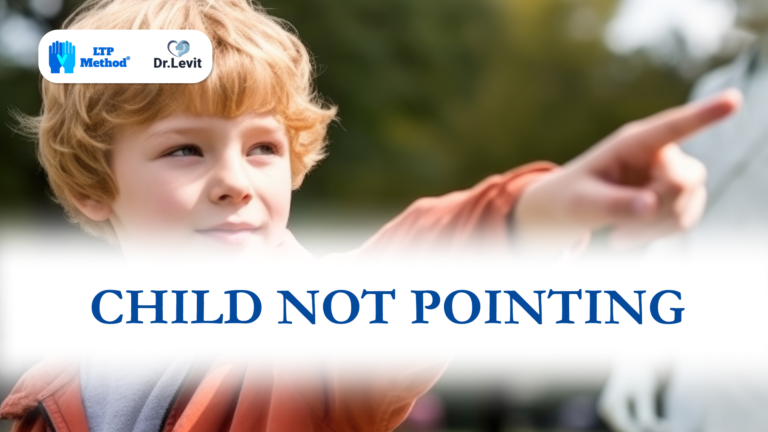
👆 The Child Does Not Point
Pointing is an important part of early communication.
A child does not point only when they want to get something.
Gradually, the ability appears to communicate without words as if saying:
“Mom, look!”
For example:
✈️ the child sees an airplane;
👀 looks at it;
👩 looks back at Mom;
👆 points to it.
This is connected with the development of joint attention.
It may be concerning when a child:
🔹 does not point;
🔹 rarely shifts their gaze from an object to an adult;
🔹 does not try to show something interesting;
🔹 takes an adult by the hand instead of using a gesture;
🔹 leads a parent to the desired object;
🔹 places the adult’s hand on what they want to get.
The absence of pointing by itself is not a diagnosis, but it is an important indicator of communication development.
🤝 The Child Uses an Adult’s Hand Instead of Making a Request
Imagine an ordinary situation.
🥤 The child wants water.
Instead of saying “give,” pointing, or looking at Mom, the child takes her by the hand, leads her to the refrigerator, and places her hand on the door.
The parent thinks:
“But they explained what they wanted.”
Yes. The child did find a way to get what they wanted.
But something else is important here: how exactly is the other person included in this communication?
Does the child look at Mom?
Do they wait for her reaction?
Do they approach her?
Do they use a gesture, sound, or word?
Or do they mainly use the adult’s hand as a tool to get what they need?
This is an important distinction when evaluating communication development.
💬 The Child Knows Words but Does Not Address Mom
This can be especially confusing for parents.
The child may know:
🔹 animals;
🔹 colors;
🔹 numbers;
🔹 letters;
🔹 songs;
🔹 entire phrases from cartoons.
But at the same time, they do not independently say:
“Mom.”
They do not call her.
They do not say “give.”
They do not ask for help.
They do not tell her what they saw.
In this situation, it is important to evaluate not only the number of words, but also the function of speech.
Speech is not simply the ability to pronounce words. Over time, it should become a tool for interacting with another person.
That is why having a large vocabulary does not necessarily mean that a child actively uses speech to communicate.
👀 Eye Contact in Autism
There is a common misconception:
“If a child makes eye contact, then they cannot have autism.”
❌ That is not true.
Some children with ASD look at their parents and other people.
What matters much more is why the child uses eye contact.
For example:
👀 do they look at Mom to share joy;
🧸 do they shift their gaze from a toy to an adult;
🙂 do they monitor another person’s reaction;
🤝 do they look for help with their eyes;
💬 do they look at a person’s face during interaction.
What matters is not simply the presence of eye contact, but its role in communication.
🗣 Does Speech Delay Mean Autism?
No. Speech delay by itself does not mean autism.
But if a child is not speaking, it is important to look at how they communicate without speech.
| Look Beyond Speech | Pay Attention To |
|---|---|
| 👆 Gestures | Does the child show what they want? |
| 👀 Eye Contact | Do they look at an adult during communication? |
| 🤝 Approaching Others | Do they ask for help? |
| 🧸 Interest | Do they show interesting objects? |
| 👂 Understanding | Do they understand spoken language? |
| 🙋 Imitation | Do they imitate adults’ actions? |
A child may have no spoken language but still actively seek interaction with people.
Or it may be the opposite: a child may know many words but hardly use them for communication.
That is why evaluating only the number of words is not enough.
🔁 Echolalia: The Child Repeats Words and Phrases
Some children repeat questions, words, advertising phrases, or entire fragments from cartoons that they have heard.
For example:
— Do you want a drink?
The child answers:
— Do you want a drink?
This type of repetition is called echolalia.
Echolalia may occur at certain stages of speech development and is not exclusively a sign of autism.
But if a child repeats a lot of what they hear and at the same time has difficulty independently using speech for requests, addressing others, and conversation, it is worth paying attention to communication development as a whole.
🙌 The Child Flaps Their Hands Like Wings
One common question is:
“My child is constantly jumping and flapping their hands — is this autism?”
Not necessarily.
A child may flap their hands:
😊 when happy;
🤩 when highly excited;
⏳ while waiting;
😟 when anxious;
📺 while watching a favorite cartoon;
🔊 during emotional or sensory overload.
Some parents describe it this way:
“When they are happy, they flap their hands like wings.”
This movement by itself does not mean autism.
What matters much more is whether other characteristics are present at the same time: difficulties with interaction, understanding speech, communication, joint attention, play, and behavior.
🔄 Why Does a Child Spin in Circles?
Some children repeatedly spin around their own axis, run in circles, rock, or repeat the same movements.
These actions may be connected, among other things, with seeking certain sensory sensations or with a way of regulating their state.
But the main rule applies here again:
❗ One repetitive action does not determine a diagnosis.
You need to look at the whole child:
How do they communicate? → Do they understand speech? → Do they play with their parents? → Do they approach them? → Do they point? → How is their independence developing?
🔁 What Is Stimming?
Repetitive movements, sounds, or actions are often called stimming.
These may include:
🔹 hand flapping;
🔹 finger movements;
🔹 rocking;
🔹 spinning in circles;
🔹 jumping;
🔹 repeating sounds;
🔹 walking along a specific route;
🔹 looking at objects from a certain angle;
🔹 spinning the wheels of a toy car;
🔹 repeatedly opening and closing doors.
Stimming is not limited to children with autism.
That is why it is incorrect to determine whether a child has ASD based only on hand flapping or spinning.
🧸 Unusual Play With Toys
Sometimes what concerns parents is not what the child plays with, but how exactly they play.
For example, instead of driving a toy car, the child may spend a long time spinning one of its wheels.
They may:
🚗 line objects up in a row;
🧩 constantly sort toys;
🔄 move them in the same way repeatedly;
🚪 open and close doors;
🔎 examine individual parts;
😣 become very upset if someone disrupts the established order.
It is important to observe whether more varied play develops and whether another person becomes involved in it.
Can the child feed a doll?
Drive a toy car?
Put a toy to bed?
Imitate Mom’s action?
Include a parent in their play?
👧 The Child Does Not Play With Other Children
Some children may be physically near their peers but hardly interact with them.
Parents sometimes say:
“He isn’t afraid of other children. He just isn’t interested in them.”
A child may run nearby, be on the same playground, take toys, but not engage in shared interaction.
At the same time, the child’s age and overall skill set should be taken into account.
It is especially important to pay attention if a lack of interest in other children occurs together with difficulties in joint attention, communication, understanding speech, and approaching adults.
📅 The Child Has Difficulty With Changes
Another characteristic parents may notice is a strong need for familiar routines.
For example:
🛣 they must take only one specific route;
🍽 eat only from a particular plate;
👕 wear specific clothing;
🧸 toys must remain in their usual places;
⏰ the usual sequence of actions cannot be changed.
Even a small change may cause a strong protest.
Predictability is important for many children. But if dependence on familiar routines significantly affects the child’s and family’s everyday life, this characteristic should also be considered as part of the overall developmental picture.
🔊 Sensory Differences in a Child
Children with ASD may have unusual reactions to sounds, touch, light, smells, clothing, or food.
For example:
👂 covers their ears because of everyday sounds;
🧹 is afraid of a vacuum cleaner or hair dryer;
✂️ has difficulty tolerating haircuts;
👕 refuses to wear certain clothing;
🍽 cannot tolerate certain food textures;
🤚 avoids touch;
🤗 or, on the contrary, constantly seeks strong hugs;
👃 smells objects;
🔎 looks at them from very close up;
💡 reacts unusually to light.
Sensory differences are not exclusively a sign of autism, but they may be part of the overall picture.
👶 Signs of Autism at Age 2: What Should Parents Pay Attention To?
By around age two, many characteristics become more noticeable to parents.
| Area | What May Be Concerning |
|---|---|
| 👂 Name | Rarely or inconsistently responds |
| 💬 Speech | Uses little meaningful speech |
| 🧠 Understanding | Has difficulty with simple requests |
| 👆 Gestures | Does not point |
| 👀 Joint Attention | Rarely tries to share something |
| 🙋 Imitation | Rarely imitates adults |
| 🤝 Approaching Others | Uses an adult’s hand instead of making a request |
| 👧 Other Children | Shows little interest in peers |
| 🔄 Behavior | Frequently repeats the same movements or actions |
| 🧸 Play | Play is mostly repetitive |
⚠️ This is not a checklist for diagnosing autism on your own.
It is much more useful to identify which specific areas of development are difficult for a particular child.
🔄 Why Is It Important Not Only to Learn a Skill but Also to Maintain It?
Parents sometimes say:
“He had already started saying words — and then stopped.”
“The pointing gesture appeared — and then disappeared again.”
“He started following requests, but after some time it was as if he had forgotten everything.”
For a parent, it is especially difficult to see a skill they waited so long for become unstable.
💙 In the LTP® Method, great attention is given not only to the emergence of new skills, but also to maintaining them in the child’s everyday life.
Speech, understanding, approaching parents, joint attention, and independence should not exist only in the format of: “can do it during a session when asked.”
It is important for the child to gradually begin using these skills independently and in different real-life situations: at home, on a walk, during meals, play, and communication with family members.
That is why the work in LTP® is built through parents and daily interaction with the child.
👉 The goal is not simply to see a new skill once, but to help make it a stable part of the child’s life.
❗ One Sign Does Not Mean Autism
This is especially important to remember.
| Parents Ask | Answer |
|---|---|
| 🙌 My child flaps their hands — is this autism? | Not necessarily |
| 👣 Walks on tiptoes — is this autism? | Not necessarily |
| 💬 Does not speak at age 2 — is this autism? | Not necessarily |
| 👀 Makes eye contact — does that mean autism is definitely impossible? | No |
| 🚗 Lines up toy cars — is this autism? | Not necessarily |
The main mistake is trying to determine a child’s condition based on one noticeable behavior.
👉 It is important to look at the entire developmental system: interaction, understanding, communication, gestures, play, behavior, and independence.
🤔 “I Recognize My Child in Several of These Points. What Now?”
This is where the most important part begins.
The child:
❌ does not respond to their name;
❌ does not point;
❌ does not approach Mom;
❌ does not understand requests;
❌ flaps their hands;
❌ does not play with other children;
❌ barely speaks.
At first glance, this may look like a set of completely different problems.
But a child’s development cannot be divided into separate, isolated symptoms.
The ability to notice another person is connected with joint attention. Joint attention is connected with communication and understanding what is happening. Communication becomes the foundation for requests, approaching others, interaction, and further speech development.
That is why the task is not only to teach a child to say a few more words, point, or stop some repetitive behavior.
💡 What Is More Important Is to Understand:
What exactly is preventing this child from developing?
Which areas need attention first?
Where should the work begin?
💙 How Child Development Is Addressed in the LTP® Method
In the LTP® Method, the child is considered as a whole, not through one isolated symptom.
The work is structured step by step and includes three stages:
| Stage | What the Work Focuses On |
|---|---|
| 🥗 1. Nutrition Stabilization | Parents receive step-by-step recommendations and learn how to organize the child’s nutrition at home |
| 💊 2. Vitamin Therapy | After nutrition is stabilized, the work continues with the next stage of the program |
| 🧠 3. Psychotherapeutic Consulting | Work on interaction, understanding, joint attention, communication, behavior, and independence |
At the third stage, parents are taught not simply to perform individual exercises, but to change the way they build everyday interaction with their child.
The work takes place in ordinary life:
🏠 at home;
🍽 during meals;
🧸 during play;
🌳 on walks;
👕 while getting dressed;
💬 in everyday communication.
This is important because a child does not develop only during sessions with a specialist. Most of the time, they are with their family.
👨👩👧 Why Does LTP® Teach Parents?
Mom and Dad are with the child every day.
They are the people the child needs to learn to approach.
Daily communication develops with them.
Within the family, dozens of natural situations arise in which the child needs to:
💬 make a request;
⏳ wait;
👂 understand what is being said;
🤝 ask for help;
👉 show what they want;
🙂 share an emotion;
🧠 follow a request;
🙋 take initiative.
That is why a significant part of the work in LTP® is built around teaching parents.
Specialists explain what to do in specific everyday situations and how to change interaction with the child, while parents apply these recommendations at home.
⚠️ When Should Parents Seek Help?
There is no need to wait until the difficulties become even greater.
It is worth paying attention if a child:
🔹 does not speak or their speech develops unusually;
🔹 does not understand spoken language;
🔹 does not respond to their name;
🔹 does not point;
🔹 does not approach parents;
🔹 uses an adult’s hand instead of making a request;
🔹 shows little interest in other children;
🔹 has significant difficulties with food;
🔹 engages in many repetitive actions;
🔹 has difficulty adapting to ordinary everyday situations;
🔹 has lost previously acquired skills.
In this situation, it makes sense not simply to continue searching for isolated symptoms online, but to look at the child’s situation as a whole.
❤️ Did You Recognize Your Child in This Article?
Maybe you came here with one question:
“Are These Signs of Autism or Not?”
But for a parent, another question is much more important:
“What Exactly Is Happening With My Child, and What Can We Do Next?”
It is impossible to answer this question based on one symptom.
Two children may have the same diagnosis — and completely different difficulties.
👦 One child may not speak but understand a great deal and actively interact with their parents.
👧 Another child may know dozens of words but hardly use them for communication.
👦 A third child may primarily struggle with nutrition, sleep, behavior, understanding speech, and interaction.
That is why before discussing further work, it is important to see the individual child, not just the name of the diagnosis.
💙 Free Assessment of Your Child’s Situation With an LTP® Specialist
At Dr. Levit Clinic, parents can receive a free online consultation with an LTP® Method specialist.
During the consultation, the specialist will help assess your specific situation:
✔️ what your child can already do;
✔️ what causes the greatest difficulties;
✔️ how they understand spoken language;
✔️ how they interact with their parents;
✔️ whether they use speech and gestures to communicate;
✔️ what is happening with nutrition, sleep, and behavior;
✔️ which areas require attention first.
After that, you will be able to better understand where to begin in your specific case and whether the LTP® program is appropriate for your child.
If, while reading this article, you thought several times:
“This sounds like my child…”
do not limit yourself to another list of signs.
Complete a short questionnaire and receive a free assessment of your child’s situation with an LTP® specialist.